Why the second row shifts
Before you read anything
$47 \times 23$. Cut the twenty-three the way module 5 taught you.
Write down the two pieces you would work out. Do not do either of them yet.
The cut, written down
Twenty-three is twenty and three. The first row is the three; the second row is the twenty.
Where the nought comes from
$47 \times 20$ is $47 \times 2$ with a nought on the end, because twenty is ten twos. So the second row ends in a nought — and that is why it looks shifted along.
learned to "put a zero there" and forgot it under pressure
A rule about typing is a rule you forget. A row you can name — this one is forty-seven twenties — cannot be written in the wrong place, because forty-seven twenties is obviously not a hundred and something.
The rectangle is still there
Module 5 cut a rectangle at the ten. Nothing has changed except that the pieces are now written under one another instead of side by side, so that they can be added.
Check yourself
Six to try
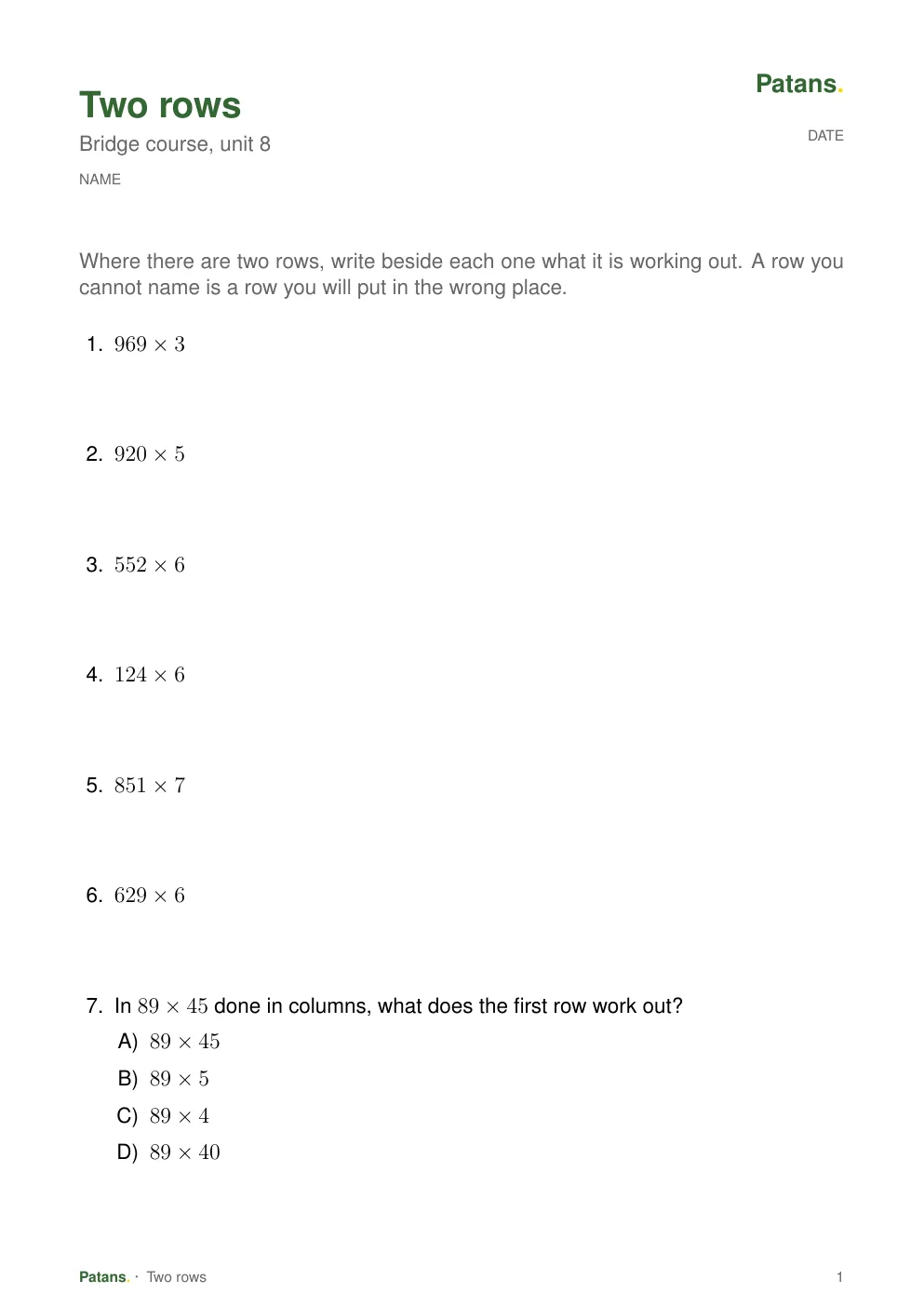
$124 \times 6$
In $89 \times 45$ done in columns, what does the first row work out?
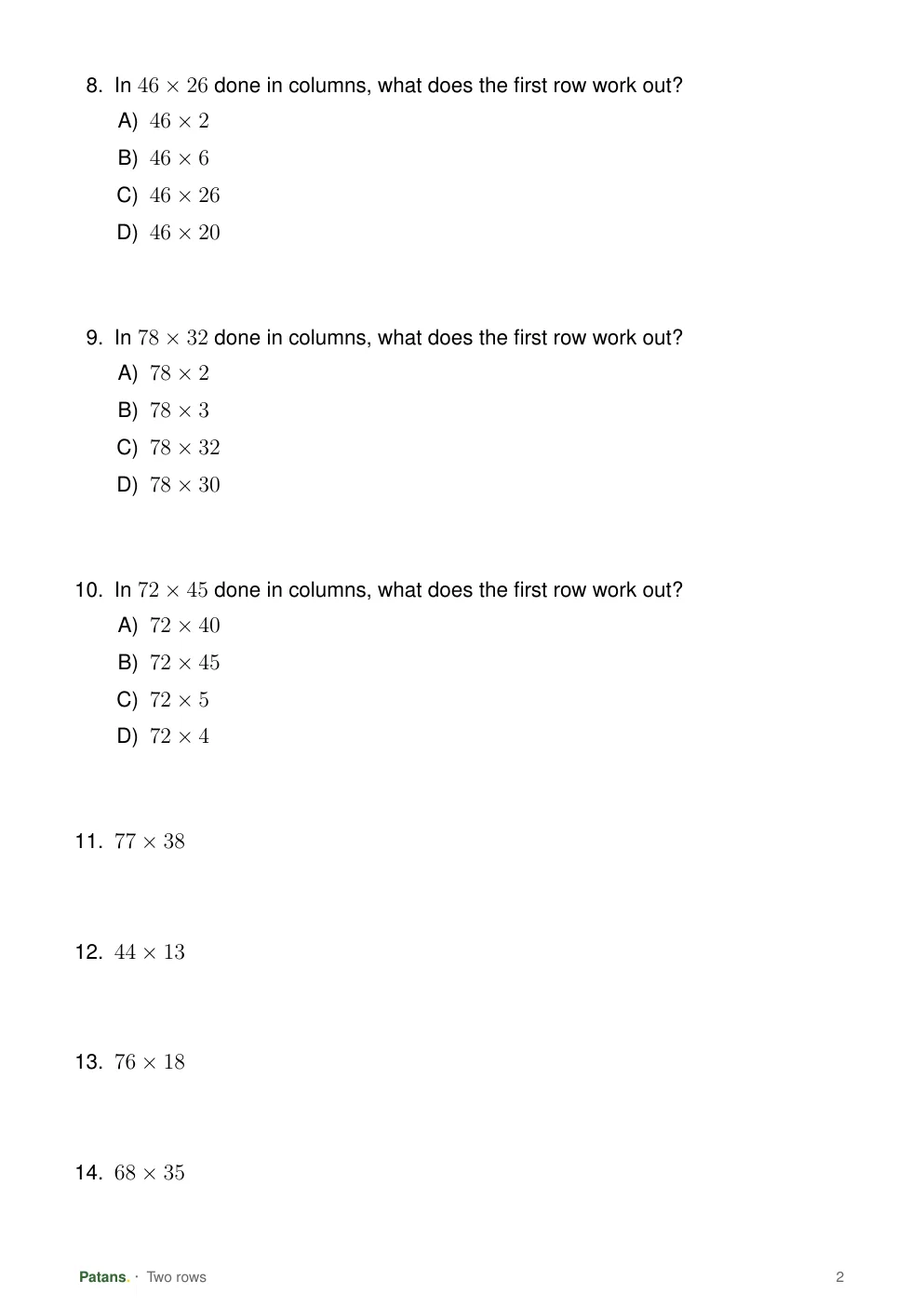
$44 \times 13$
Working out $64 \times 39$ in columns, the second row starts with a nought. Why?
$552 \times 6$
In $78 \times 32$ done in columns, what does the first row work out?
Show that you have it
Both rows, and the reason
$68 \times 35$
Working out $44 \times 48$ in columns, the second row starts with a nought. Why?