What the small one is
Before you read anything
$347 + 285$. Try it in your head first, honestly, and notice where you lose it.
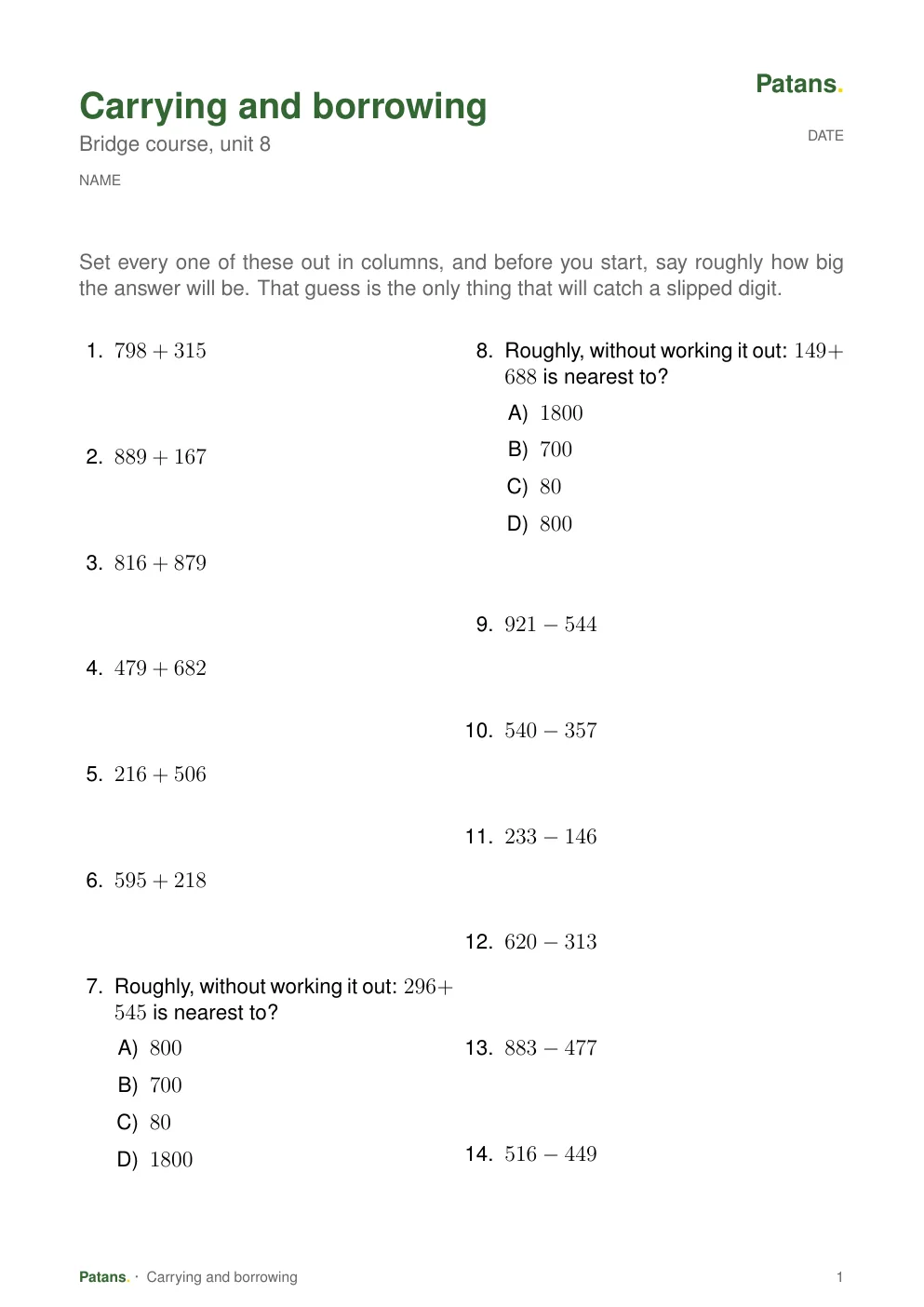
Then set it out in columns — and before you work it out, say roughly how big the answer will be.
Ten tens, going next door
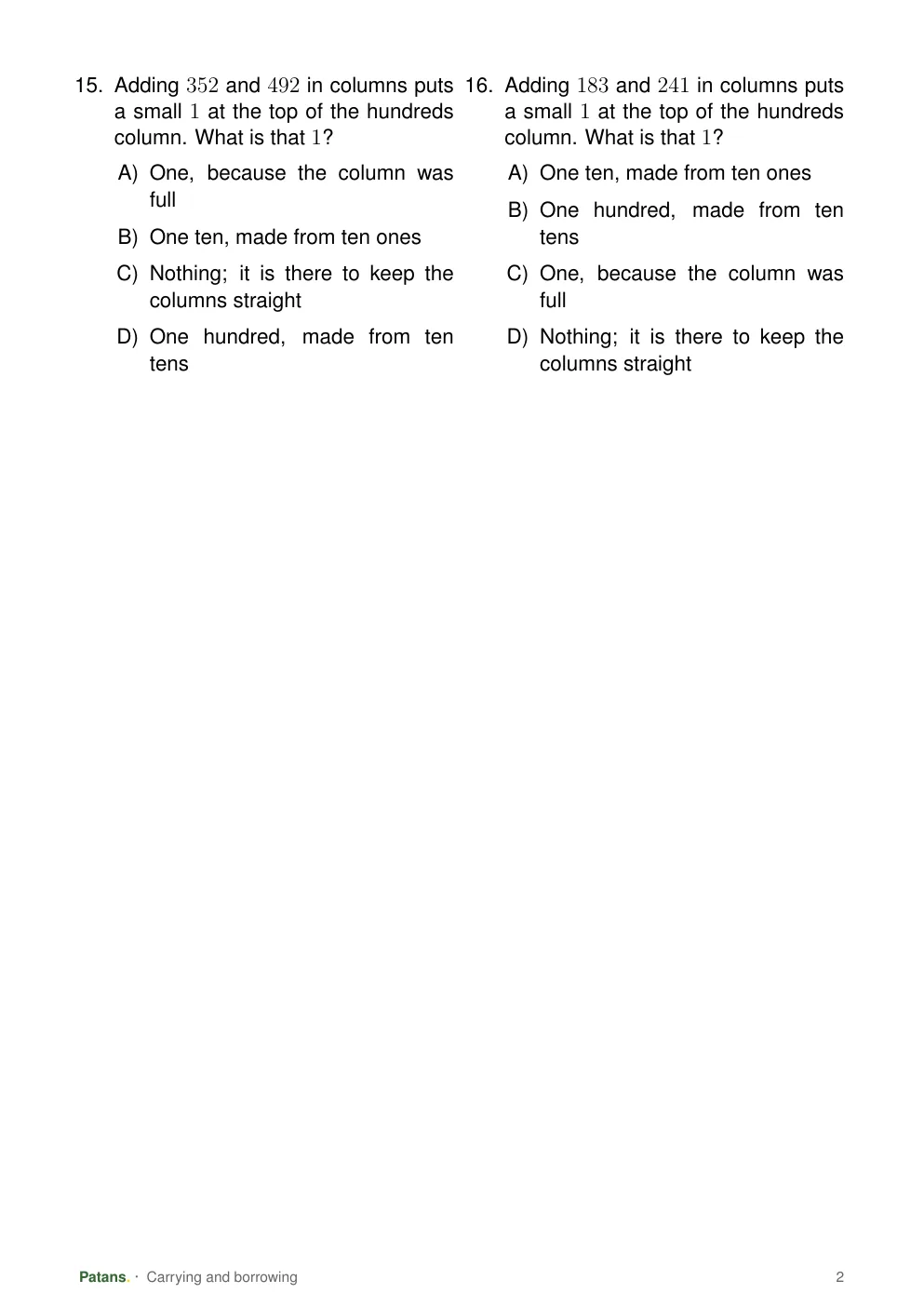
That is the small 1. Not a mark, not a rule — a hundred, standing in the column where hundreds live.
The same move you already know
:x nutshell-exchange
Ten of one size traded for one of the next size up. The amount does not change; only how it is held does.
Module 3 tied ten ones into a ten. This is the same :exchange with bigger pieces, and it will be the same one again in the thousands. There is only ever this one move.
Backwards, it is a bundle opened
$503 - 176$. There are three ones and you need six, so a ten is opened: four tens and thirteen ones. And there were no tens to open, so a hundred was opened first.
wrote 4 tens and 13 ones, and left the tens digit alone
The opened ten is gone. If thirteen ones arrive, the tens column has to go down by one — otherwise the number quietly grew.
Say how big first
Columns fail silently. A slipped digit gives a wrong answer that looks exactly as tidy as a right one, so the guess you made at the start is the only thing that will catch it.
Check yourself
Six to try
Roughly, without working it out: $296 + 545$ is nearest to?
$216 + 506$
$798 + 315$
Adding $352$ and $492$ in columns puts a small $1$ at the top of the hundreds column. What is that $1$?
$233 - 146$
Taking $4$ from the ones of $53$: there are not enough. What happens?
Show that you have it
The hardest kind
$540 - 357$
$516 - 449$