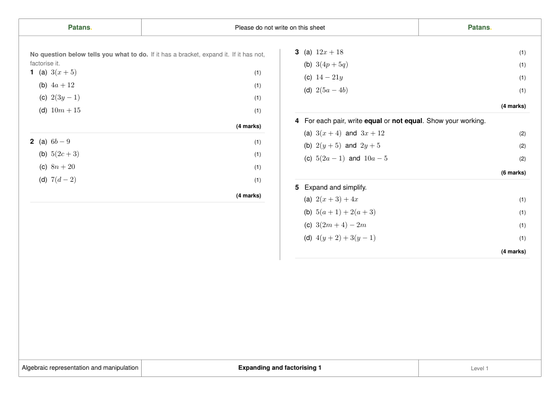
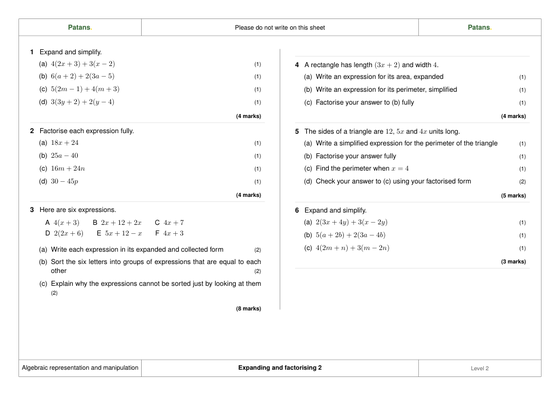
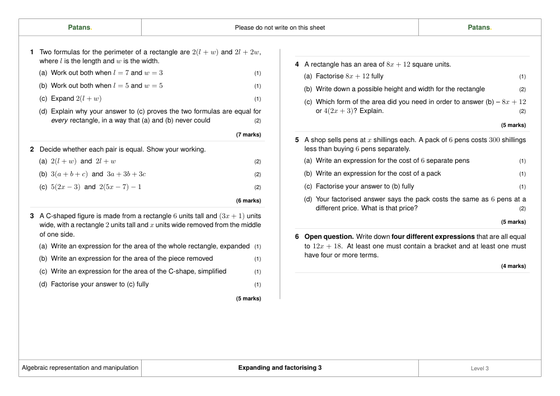
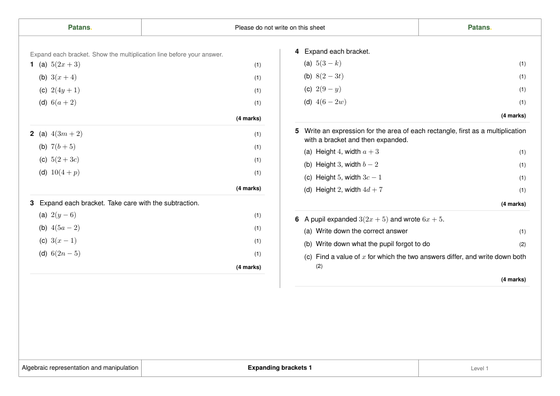
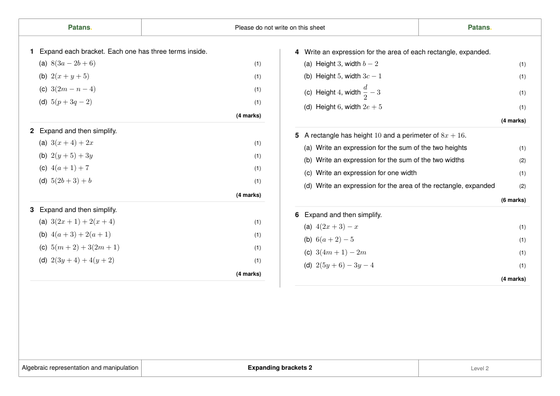
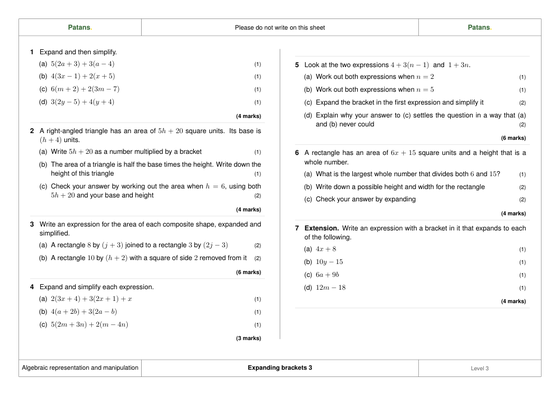
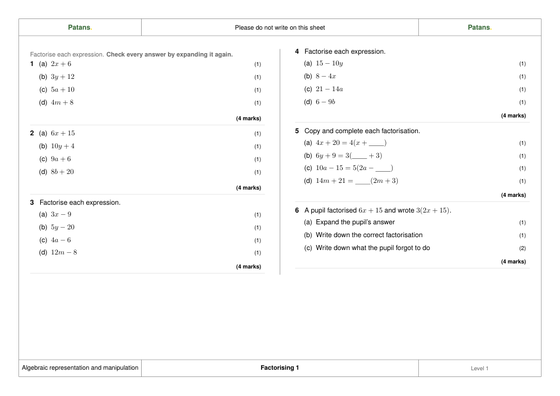
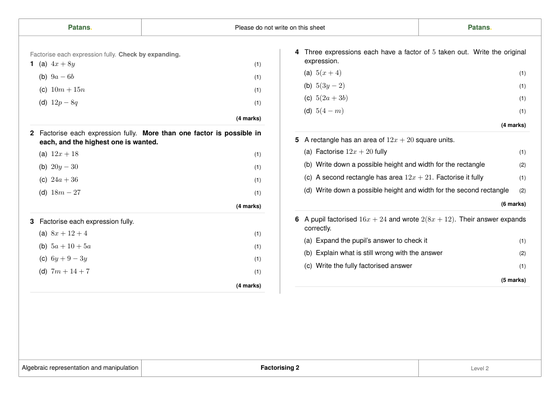
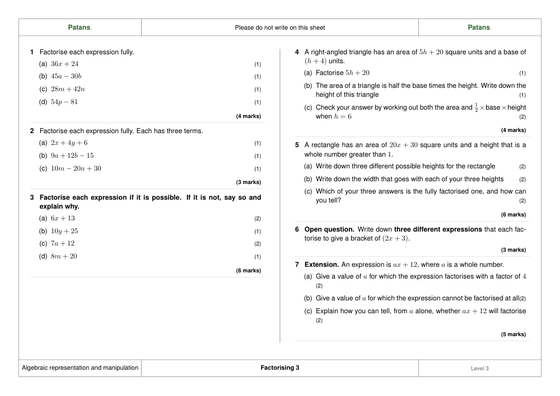
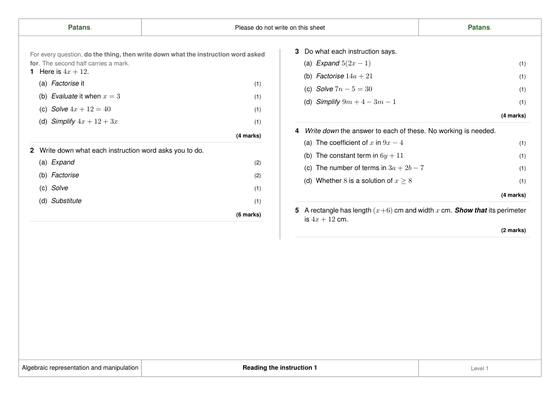
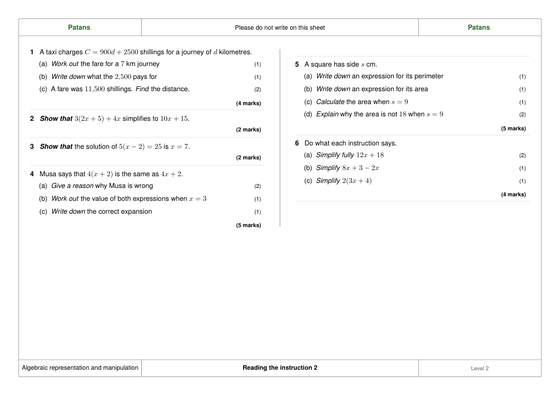
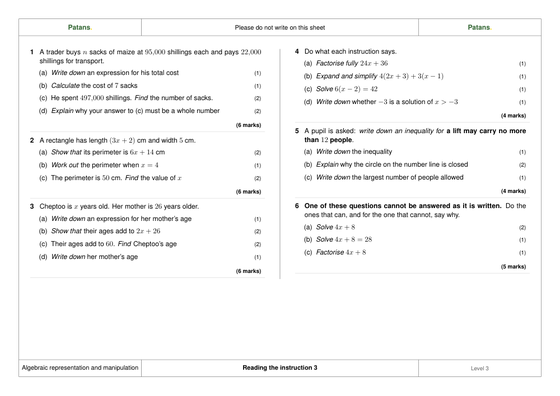
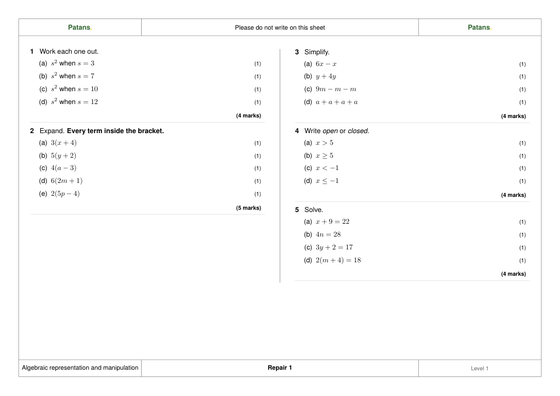
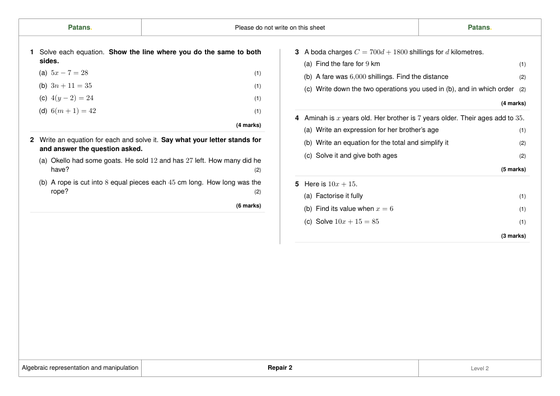
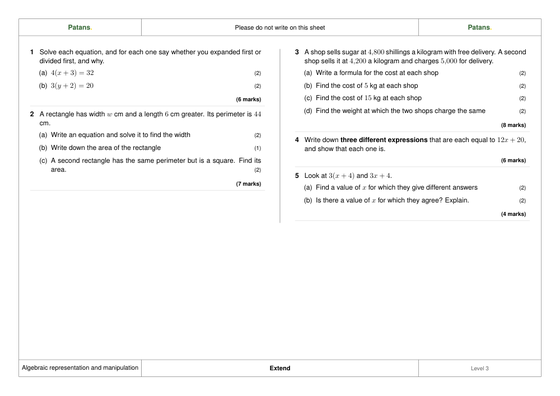
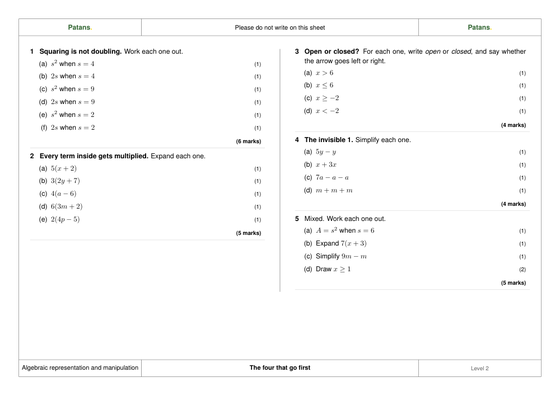
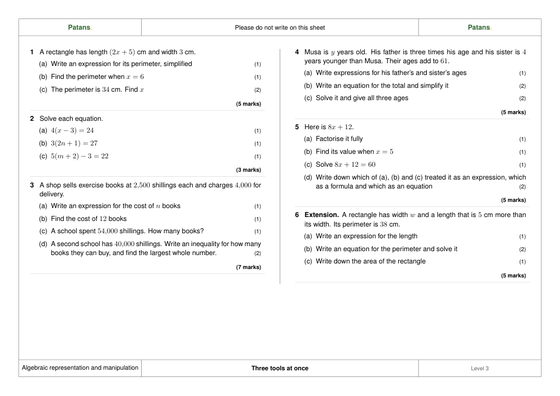
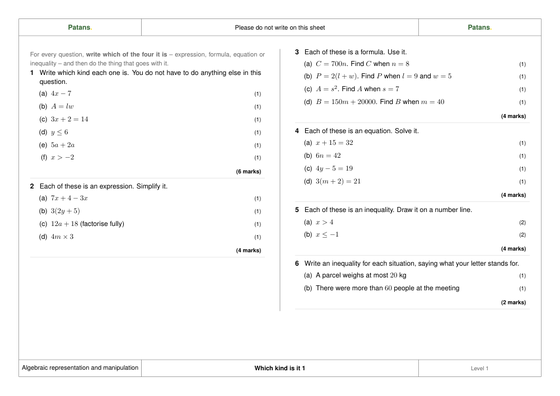
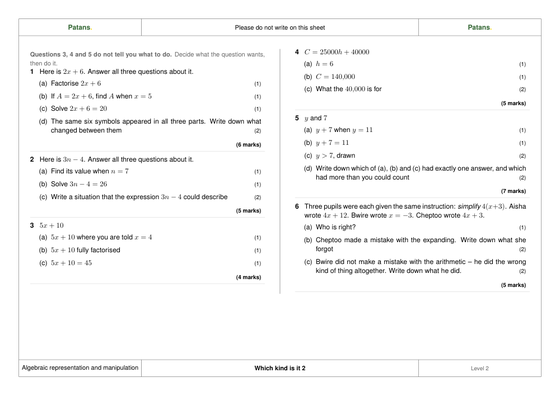
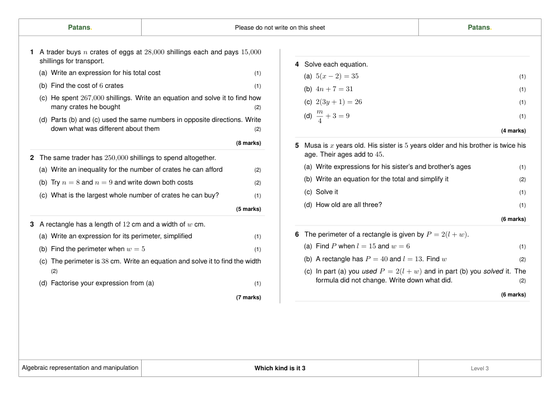
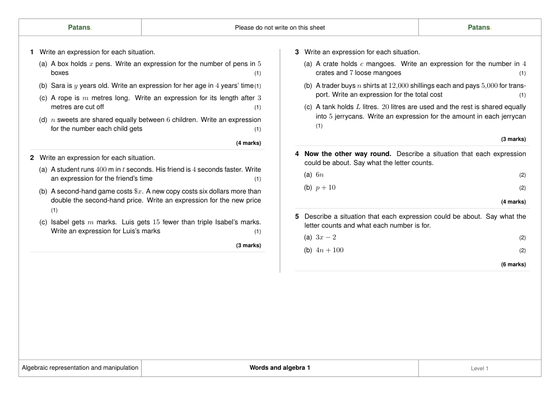
Understand how to manipulate algebraic expressions including:- applying the distributive law with a single term (squares and cubes)- identifying the highest common factor to factorise.
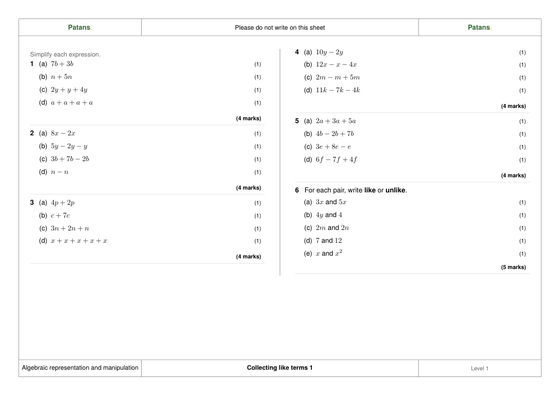
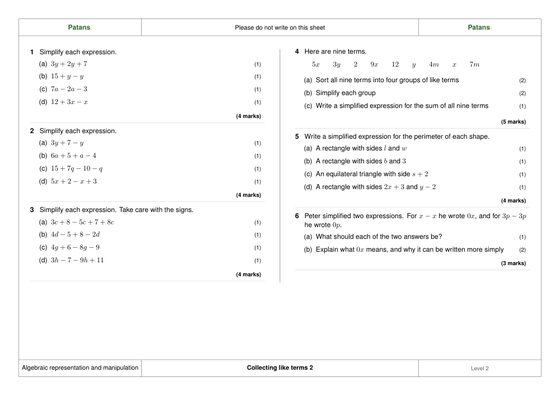
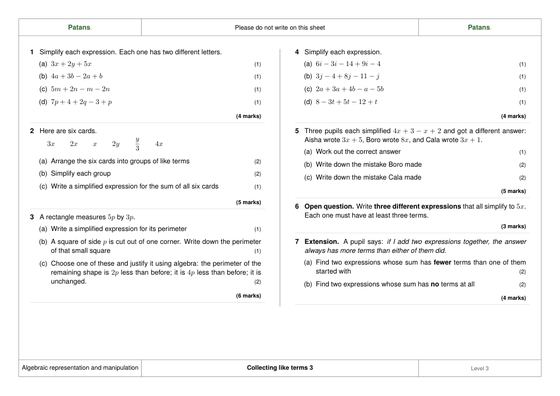
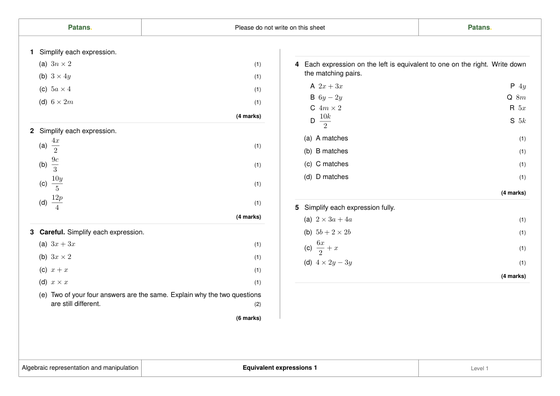
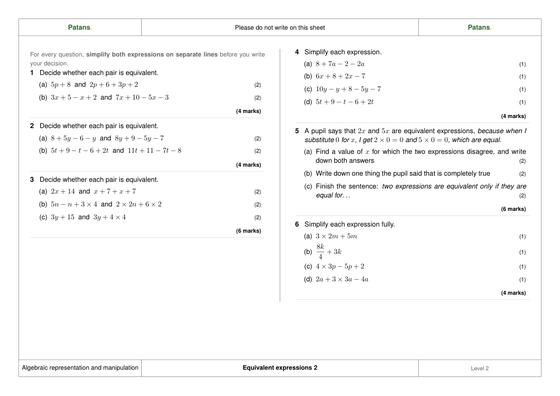
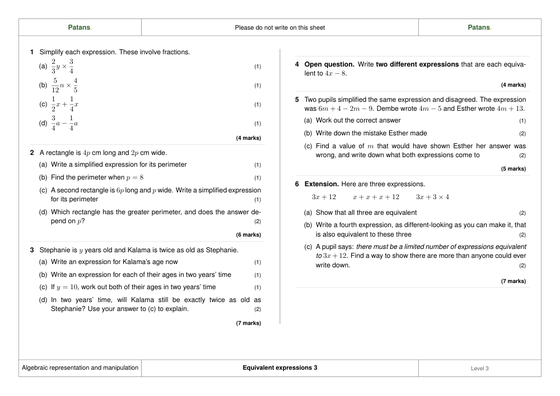
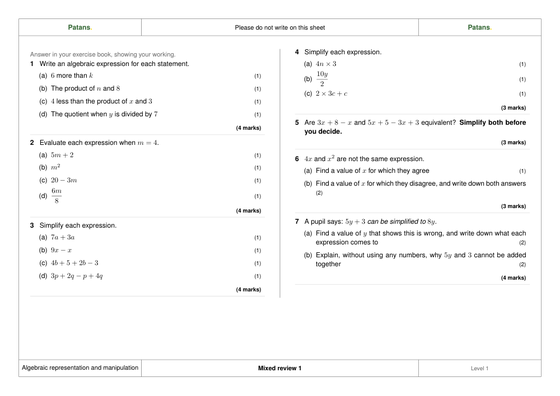
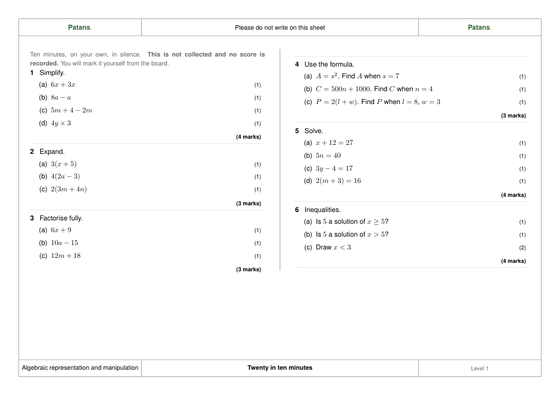
Understand how to manipulate algebraic expressions including:- collecting like terms- applying the distributive law with a constant.
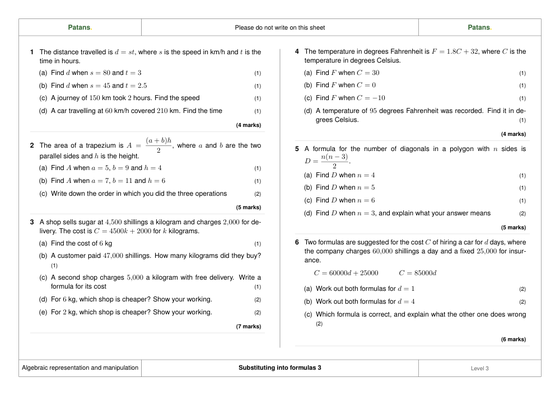
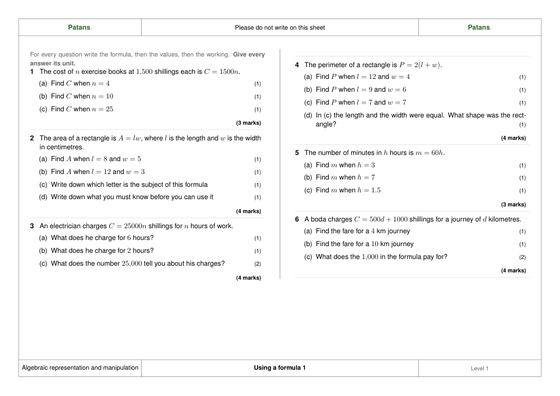
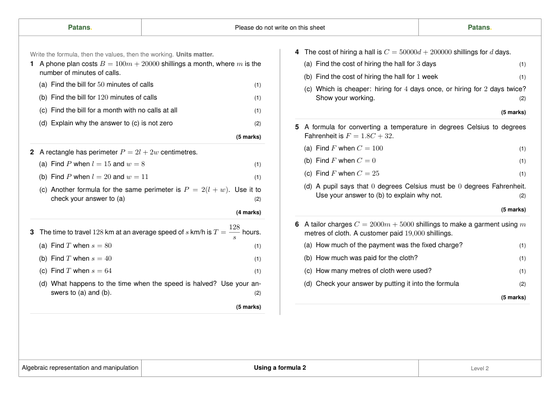
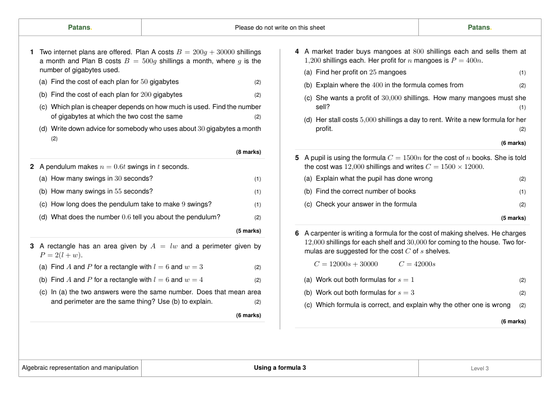
Understand that a situation can be represented either in words or as a formula (including squares and cubes), and manipulate using knowledge of inverse operations to change the subject of a formula.
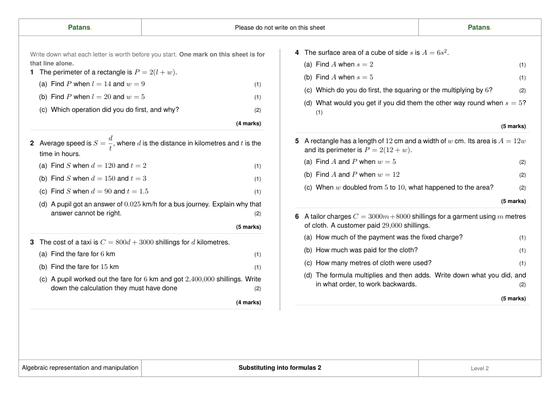
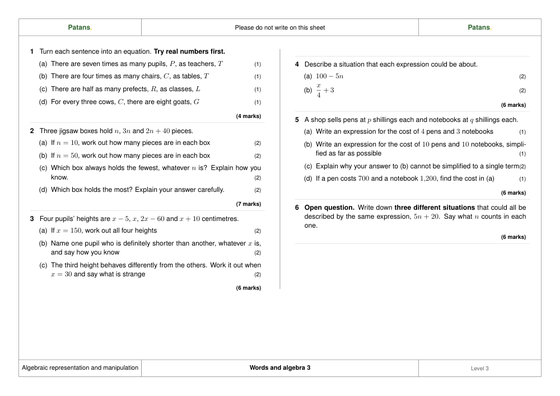
Understand that a situation can be represented either in words or as a formula (mixed operations), and manipulate using knowledge of inverse operations to change the subject of a formula.
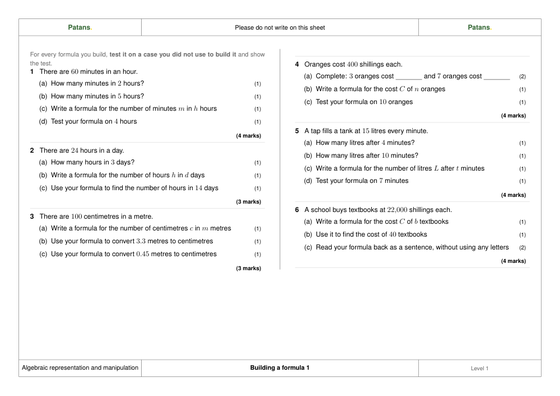
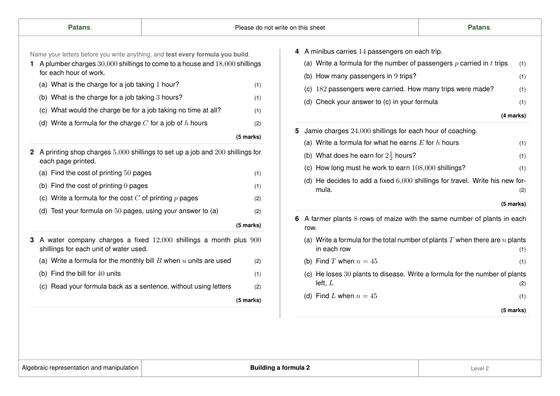
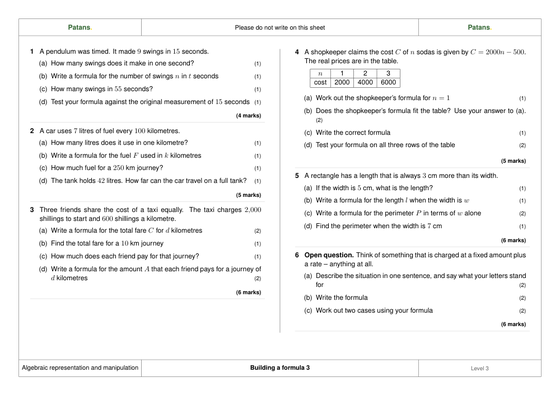
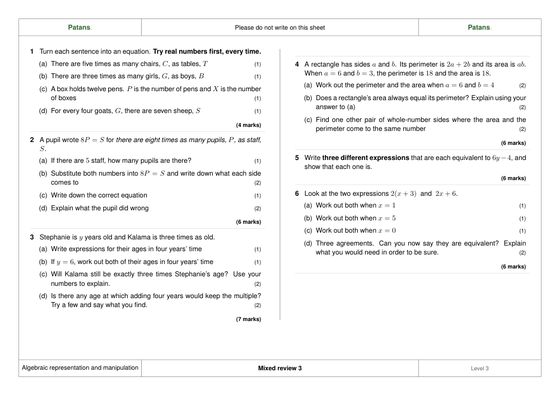
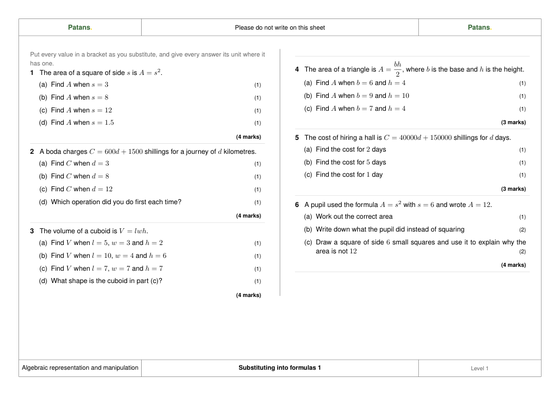
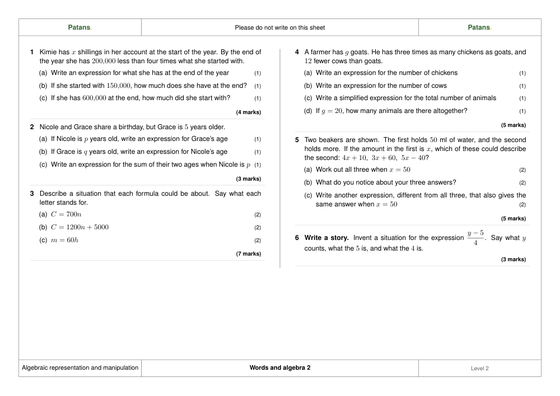
Understand that a situation can be represented either in words or as a formula (single operation), and move between the two representations.
Understand that a situation can be represented either in words or as an algebraic expression, and move between the two representations (including squares, cubes and roots).
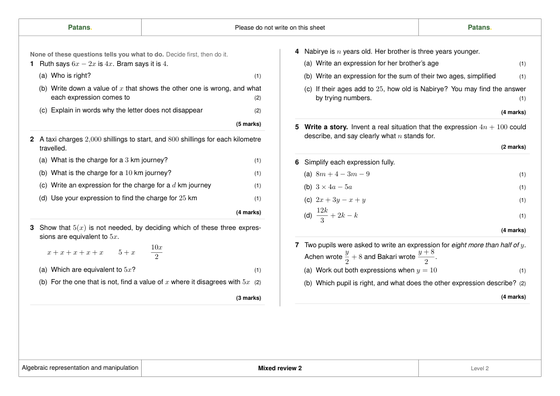
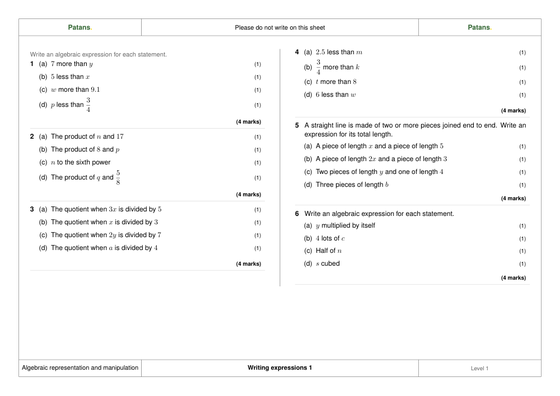
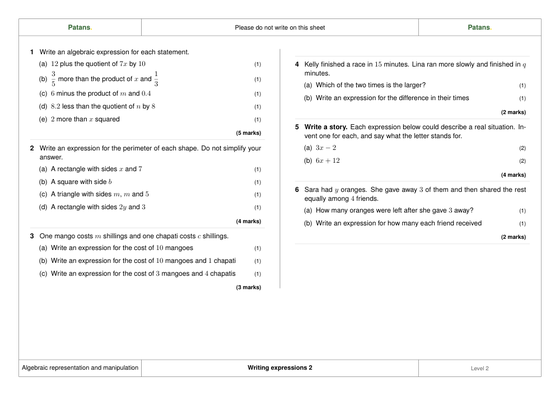
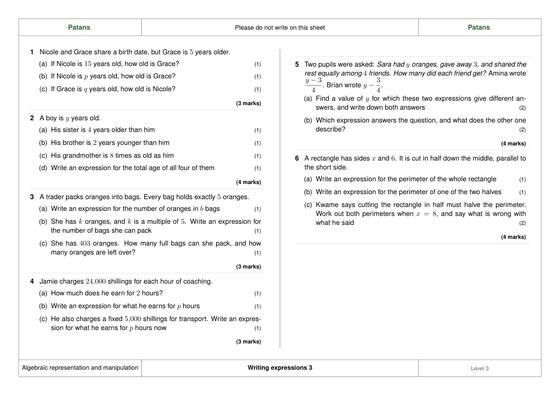
Understand that a situation can be represented either in words or as an algebraic expression, and move between the two representations (linear with integer coefficients).
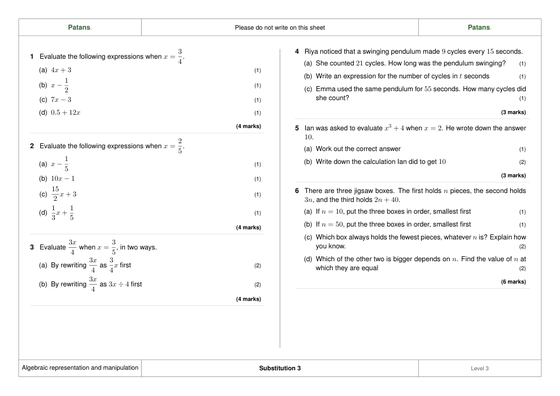
Understand that a situation can be represented either in words or as an algebraic expression, and move between the two representations (linear with integer or fractional coefficients).
Understand that a situation can be represented either in words or as an equation. Move between the two representations and solve the equation (including those with an unknown in the denominator).
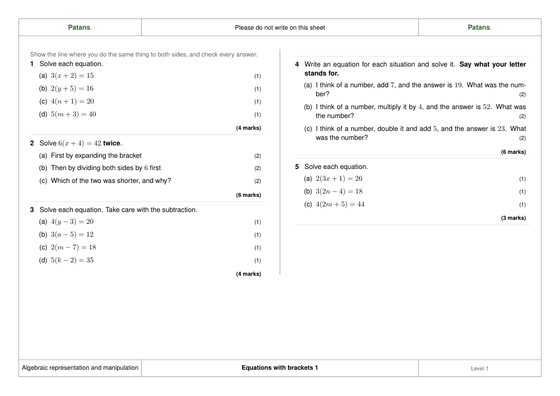
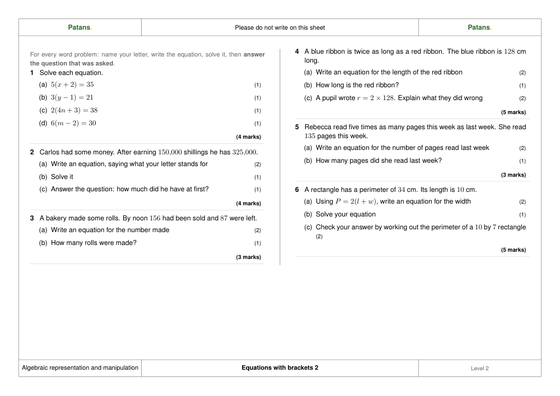
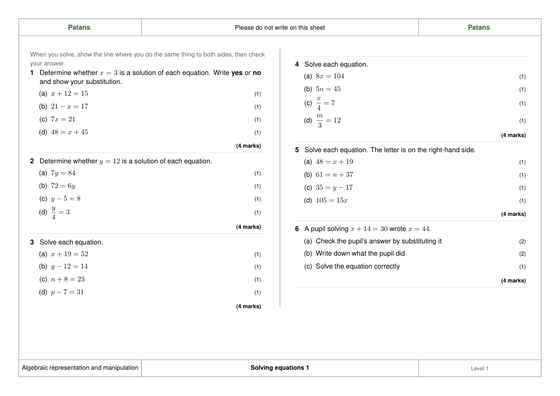
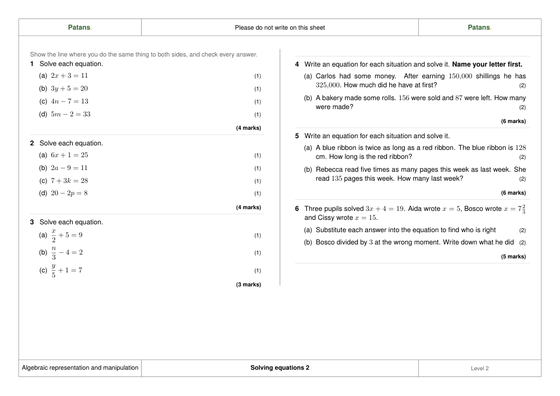
Understand that a situation can be represented either in words or as an equation. Move between the two representations and solve the equation (integer coefficients, unknown on one side).
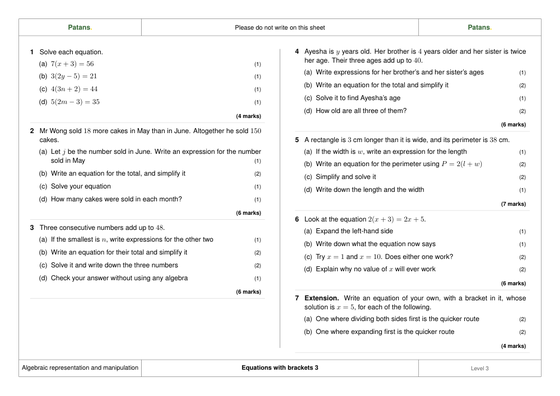
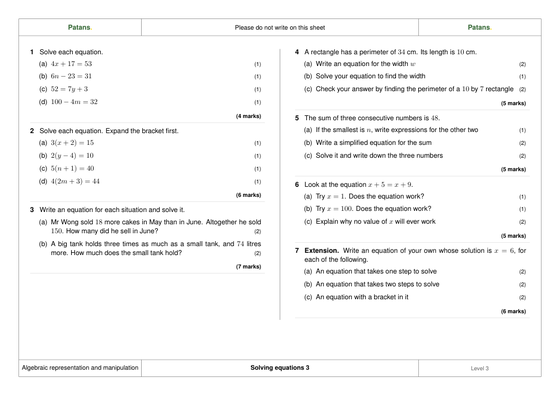
Understand that a situation can be represented either in words or as an equation. Move between the two representations and solve the equation (integer or fractional coefficients, unknown on either or both sides).
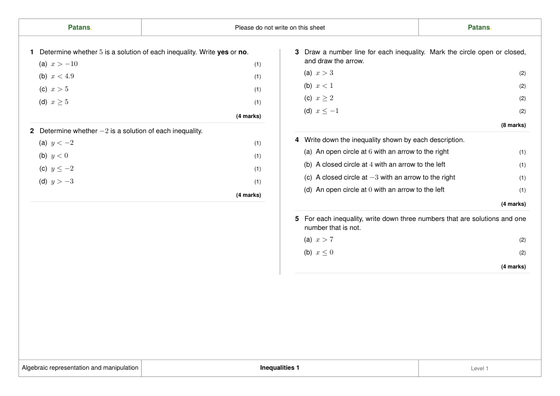
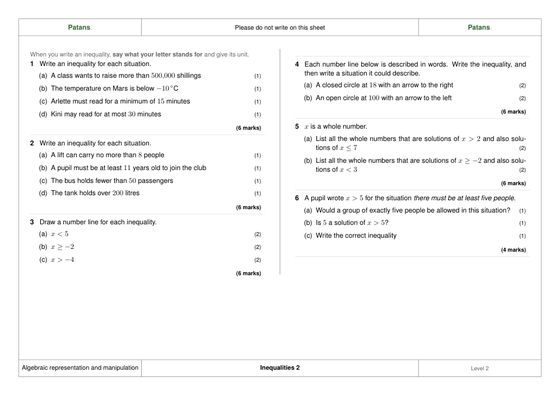
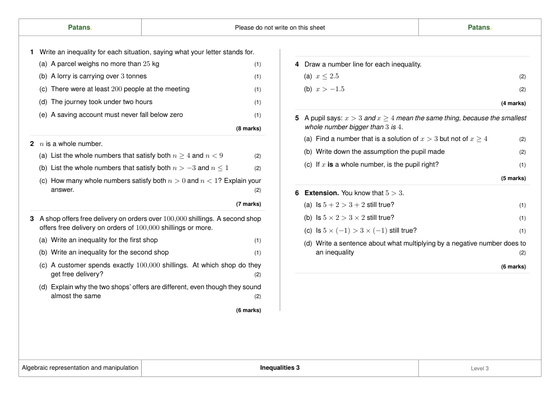
Understand that a situation can be represented either in words or as an inequality. Move between the two representations and solve linear inequalities.
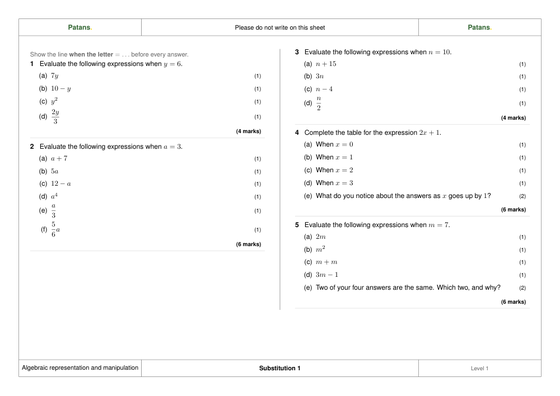
Understand that letters can be used to represent unknown numbers, variables or constants.
Understand that letters can represent an open interval (one term).
Understand that letters can represent open and closed intervals (two terms).
Understand that letters have different meanings in expressions, formulae and equations.
Understand that the laws of arithmetic and order of operations apply to algebraic terms and expressions (four operations and integer powers).
Understand that the laws of arithmetic and order of operations apply to algebraic terms and expressions (four operations).
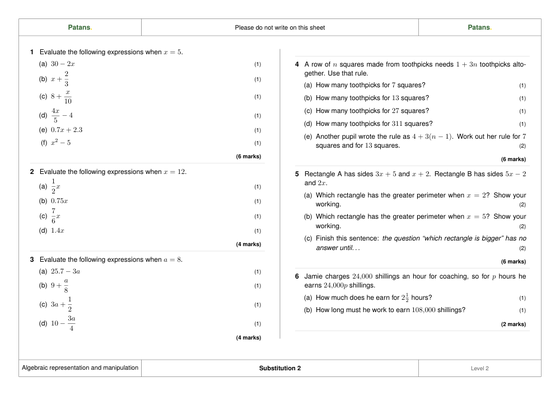
Understand that the laws of arithmetic and order of operations apply to algebraic terms and expressions (four operations, squares and cubes).
Understand that the solution of simultaneous linear equations:is the pair of values that satisfy both equationscan be found algebraically (eliminating one variable)can be found graphically (point of intersection).
Understand that when a number is rounded there are upper and lower limits for the original number.