Derive and know the formula for the area of a triangle. Use the formula to calculate the area of triangles and compound shapes made from rectangles and triangles.
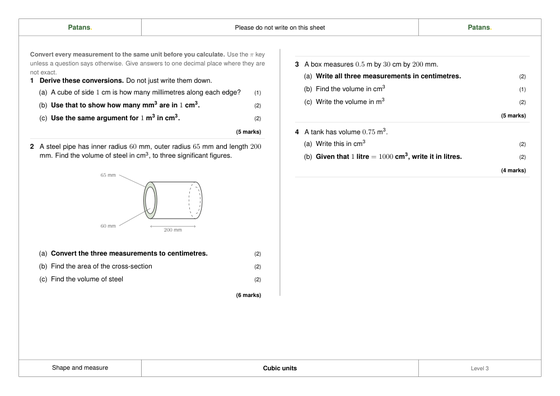
Derive and use a formula for the volume of a cube or cuboid. Use the formula to calculate the volume of compound shapes made from cuboids, in cubic metres (m3), cubic centimetres (cm3) and cubic millimetres (mm3).
Derive the property that the sum of the angles in a quadrilateral is 360°, and use this to calculate missing angles.
Draw parallel and perpendicular lines, and quadrilaterals.
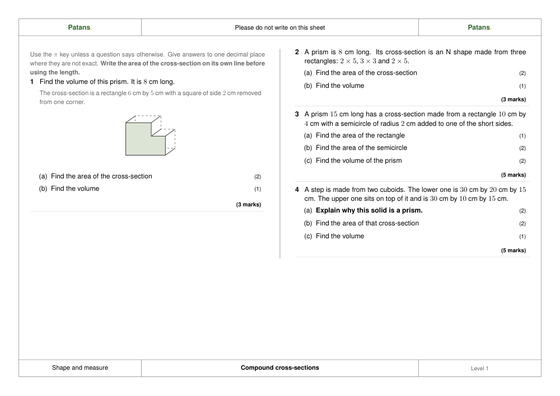
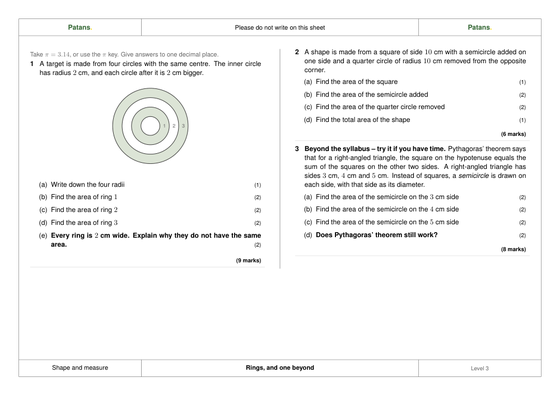
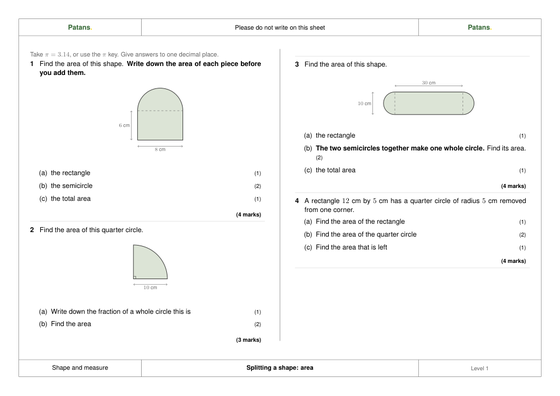
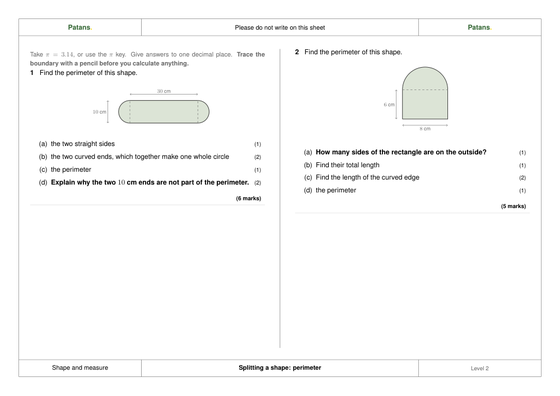
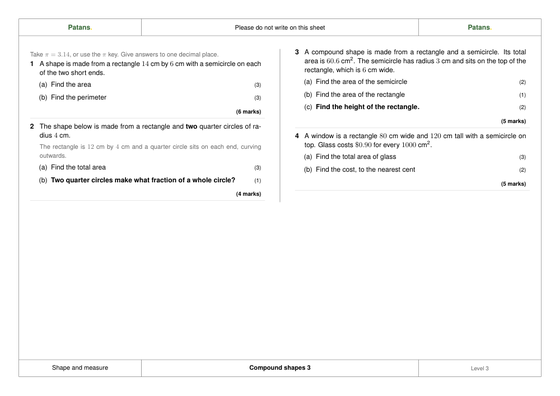
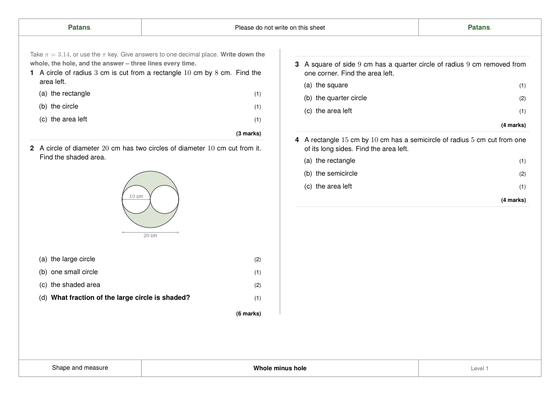
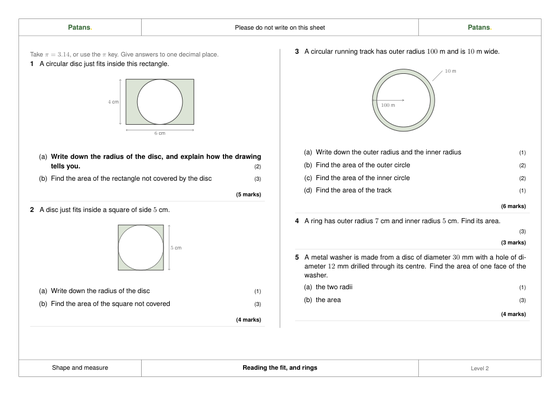
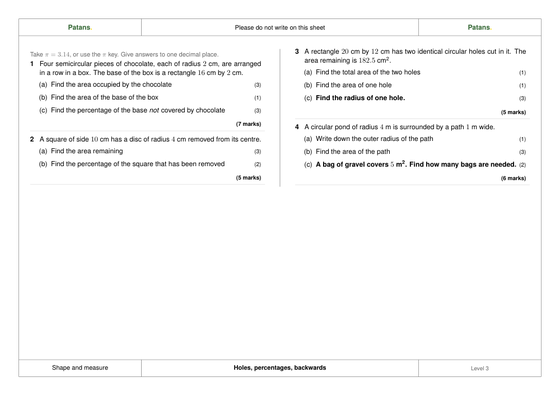
Estimate and calculate areas of compound 2D shapes made from rectangles, triangles and circles.
Identify and describe the combination of properties that determine a specific 3D shape.
Identify and describe the hierarchy of quadrilaterals.
Identify reflective symmetry and order of rotational symmetry of 2D shapes and patterns.
Identify reflective symmetry in 3D shapes.
Identify, describe and sketch regular polygons, including reference to sides, angles and symmetrical properties.
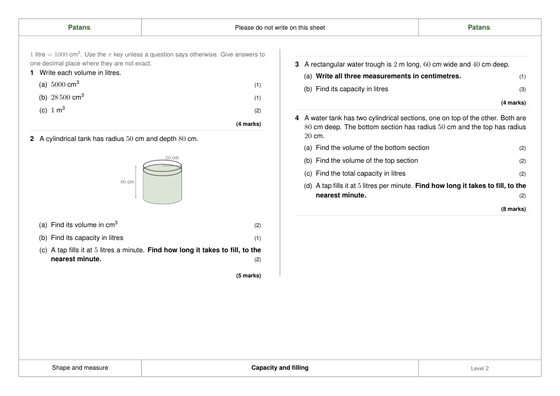
Know and recognise very small or very large units of length, capacity and mass.
Know and use Pythagoras’ theorem.
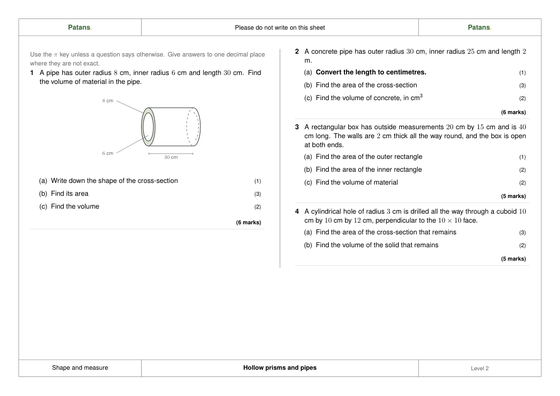
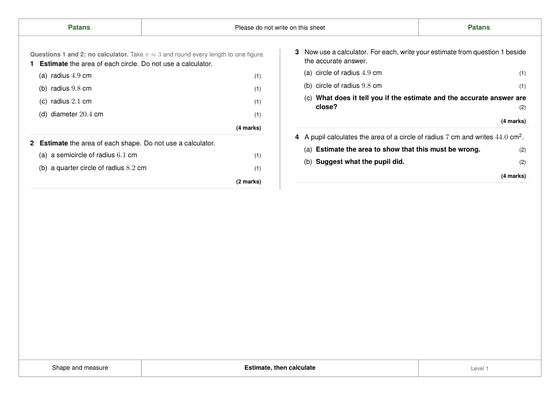
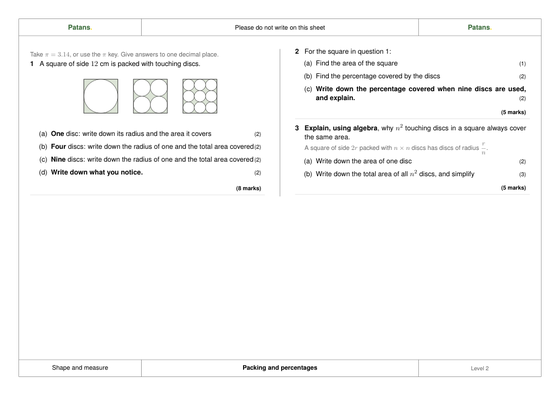
Know and use the formulae for the area and circumference of a circle.
Know that the sum of the angles around a point is 360º, and use this to calculate missing angles.
Know the parts of a circle:- centre- radius- diameter- circumference- chord- tangent.
Recognise the properties of angles on:- parallel lines and transversals - perpendicular lines- intersecting lines.
Represent front, side and top view of 3D shapes to scale.
Understand and use Euler’s formula to connect number of vertices, faces and edges of 3D shapes.
Understand that if two 2D shapes are congruent, corresponding sides and angles are equal.
Understand that the number of sides of a regular polygon is equal to the number of lines of symmetry and the order of rotation.
Understand the relationships and convert between metric units of area, including hectares (ha), square metres (m²), square centimetres (cm²) and square millimetres (mm²).
Understand π as the ratio between a circumference and a diameter. Know and use the formula for the circumference of a circle.
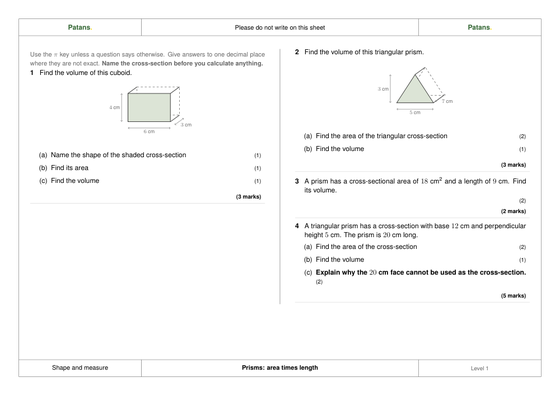
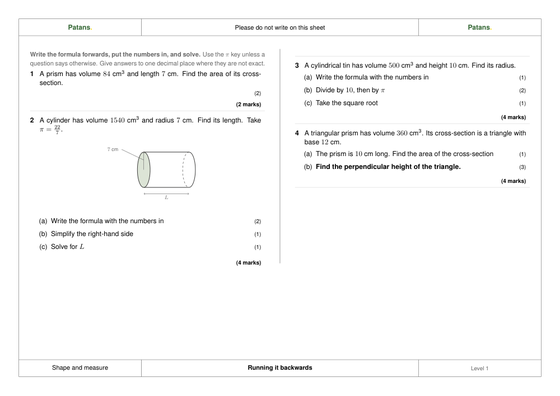
Use knowledge of area and volume to derive the formula for the volume of a triangular prism. Use the formula to calculate the volume of triangular prisms.
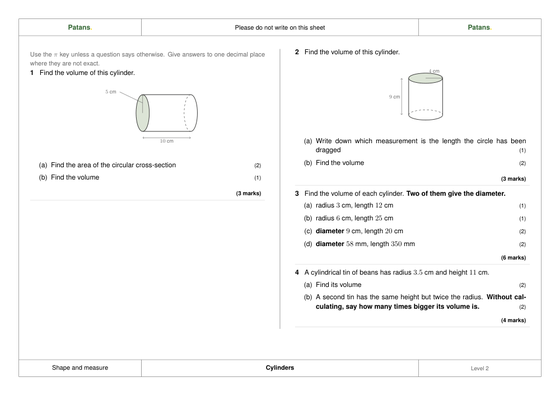
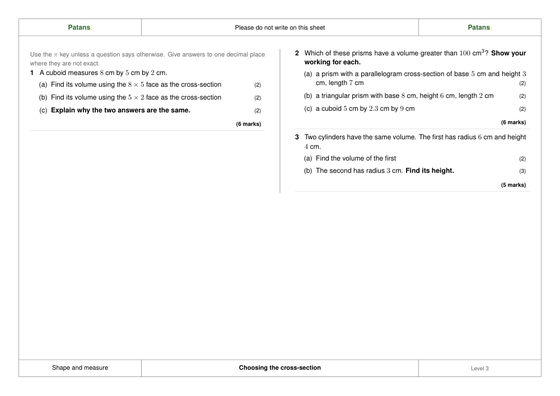
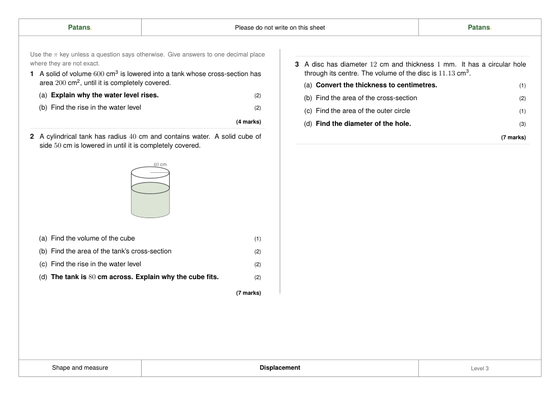
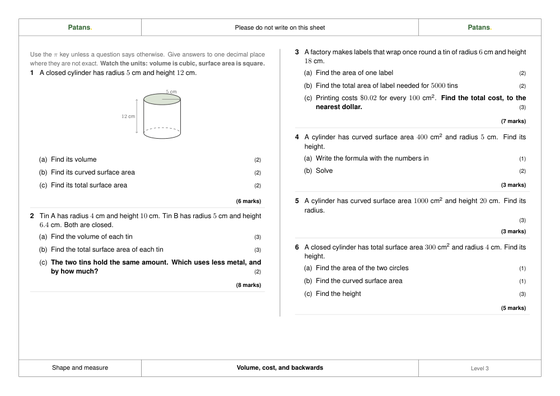
Use knowledge of area and volume to derive the formula for the volume of prisms and cylinders. Use the formula to calculate the volume of prisms and cylinders.
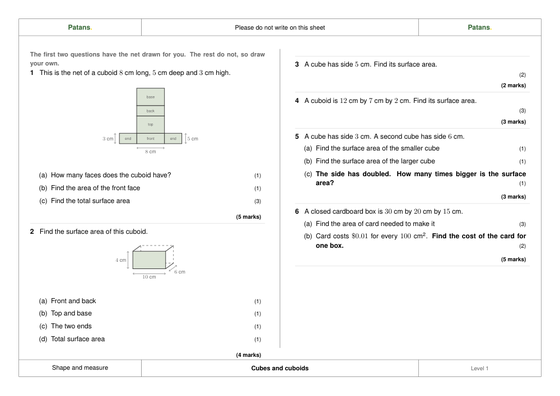
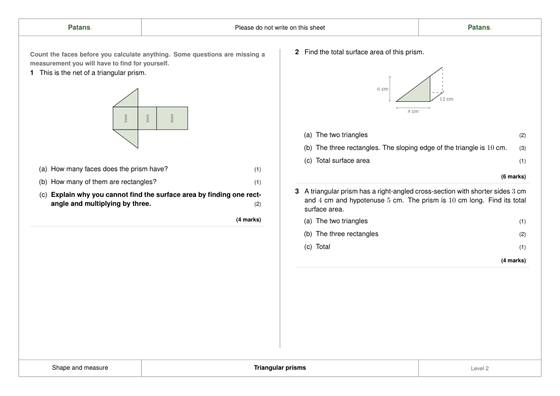
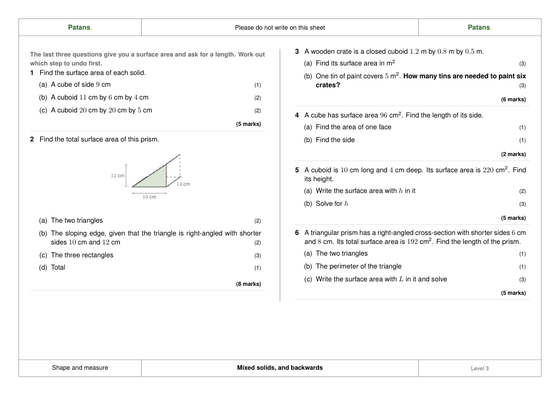
Use knowledge of area, and properties of cubes and cuboids to calculate their surface area.
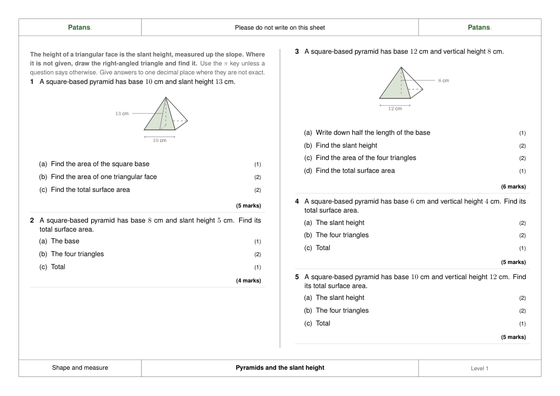
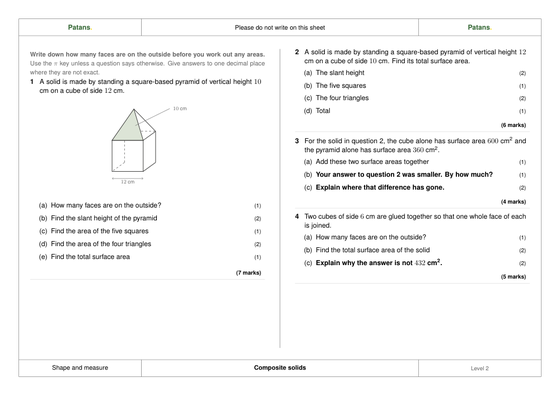
Use knowledge of area, and properties of cubes, cuboids, triangular prisms and pyramids to calculate their surface area.
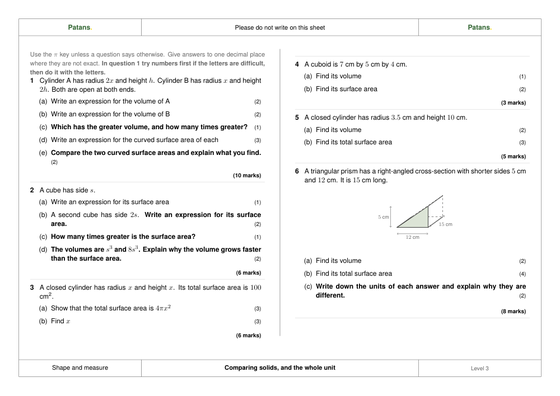
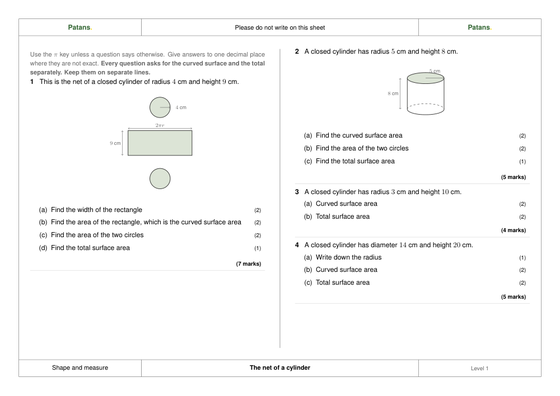
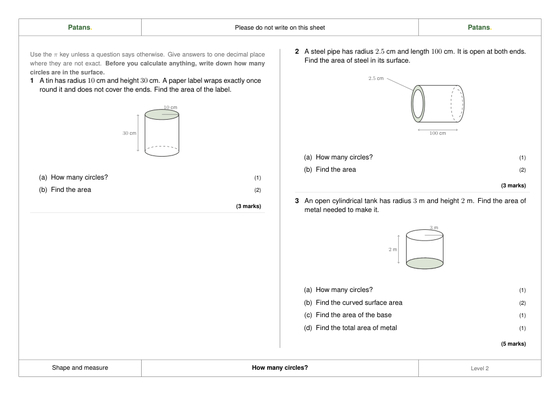
Use knowledge of area, and properties of cubes, cuboids, triangular prisms, pyramids and cylinders to calculate their surface area.
Use knowledge of rectangles, squares and triangles to derive the formulae for the area of parallelograms and trapezia. Use the formulae to calculate the area of parallelograms and trapezia.
Visualise and represent front, side and top view of 3D shapes.